Leadership Notes #65

Interview with Stanley A. McChrystal
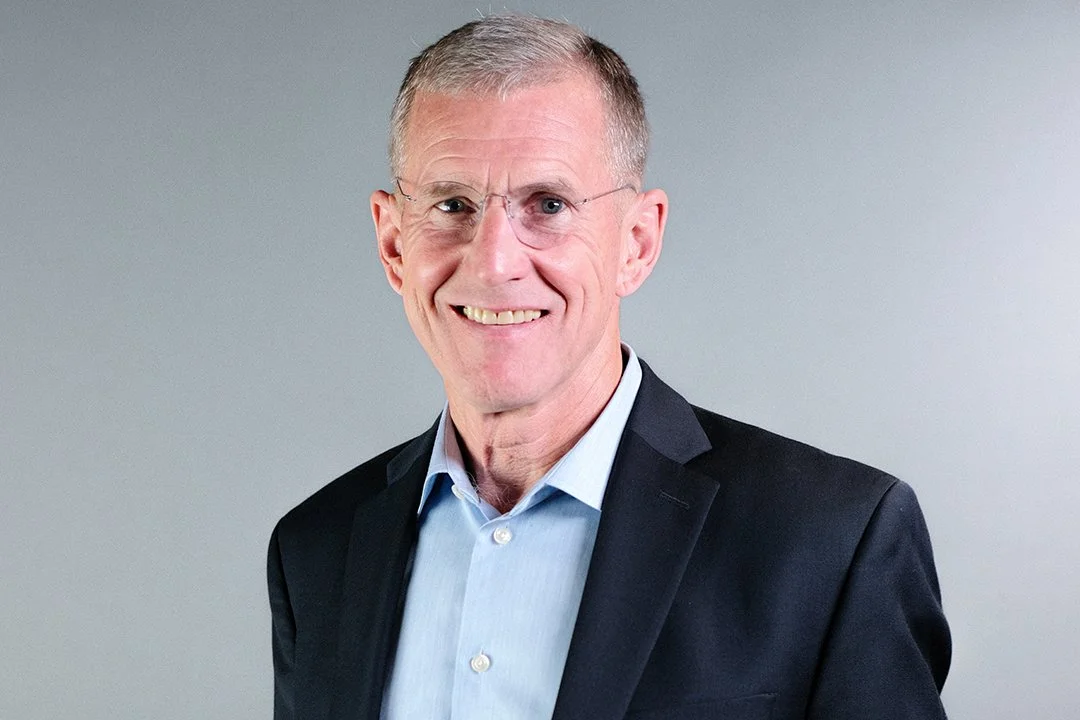

A retired four-star general, Stan is the former commander of US and International Security Assistance Forces (ISAF) Afghanistan and the former commander of the nation’s premier military counter-terrorism force, Joint Special Operations Command (JSOC). He is best known for developing and implementing a comprehensive counterinsurgency strategy in Afghanistan, and for creating a cohesive counter-terrorism organization that revolutionized the interagency operating culture.
Throughout his military career, Stan commanded a number of elite organizations, including the 75th Ranger Regiment. After 9/11 until his retirement in 2010, he spent more than 6 years deployed to combat in a variety of leadership positions. In June 2009, the President of the United States and the Secretary General of NATO appointed him to be the Commander of US Forces Afghanistan and NATO ISAF. His command included more than 150,000 troops from 45 allied countries. On August 1, 2010 he retired from the US Army.
In 2013, Stan published his memoir, My Share of the Task, which was a New York Times bestseller; and is an author of Team of Teams: New Rules of Engagement for a Complex World, which was a New York Times bestseller in 2015. His latest book, On Character, was an instant New York Times bestseller. He previously served as a senior fellow at Yale University’s Jackson Institute for Global Affairs, where he also taught a course on Leadership. He is a sought-after speaker, giving speeches on leadership and team dynamics to organizations around the globe.
Stan is a graduate of the United States Military Academy at West Point and the Naval War College. He also completed year-long fellowships at Harvard’s John F. Kennedy School of Government and the Council on Foreign Relations.
A condensed transcript of PGLF Virtual Leadership Series at CIED, Georgetown
Potolicchio: I'd like to read from another book that you wrote, “My Share of the Task.” On page 19, you write, "We were at the Academy during the doldrums of the early 1970s, too late to have been ignited by President Kennedy's idealism, and too soon to be bolstered by Reagan's confidence.”
One of my favorite interviews you've done about your book, which is now celebrating its one-year anniversary, is when you were with Jon Stewart on The Daily Show. You turned to the audience and said, “I really want to start a national conversation on character.” Can you talk about the origin story of why character and why at this moment? Do you have optimism that we're going to have a resurgence of character, particularly in the public sphere?
McChrystal: Character is incredibly important. I had great parents who exemplified character, but didn't talk about it a lot, didn't preach; they just did it. Then, I went to West Point, where they were very overt about showing examples of leaders and the honor code. It was anything but subtle trying to get you to embrace character. It wasn't only to make you a good cadet. It was to put things inside you that would grow over a lifetime because when you're out in the world, things get gray.
I had read some philosophy when I was young, but I'd read it because they told me to. Later, I started reading it because I wanted to. My wife and I like to read a lot. We sit in our living room, and every 20 minutes or so, I would interrupt her with some idea on some subject; I just couldn't hold it in. I would say: “Annie, here's what I think about x.” She would smile and nod. Then, finally, one day, she says, “Stop telling me this stuff. Write it down.” I thought she was just trying to shut me up, but I started writing it down into a series of reflections that make up the book. What I found was that it didn't start with a focus or title on character, it all just intersected.
I'm 71 now, I've got stage 4 cancer, and the reality is I think a lot about my life to date and what's in the future. I realized that the thing that always mattered was character. So much of the time in my life I was focused on doing well whatever I was doing, being a good Army officer, because that seemed important at the moment.
In retrospect, the thread that went through it all was character. I have this deep belief that it is true at the individual level and also at the organizational, national, and global level. We just seem to be unable to remember that reality.
Potolicchio: There is an undisputed GOAT of presidential memoirs, and that is that of General/President Grant. What I found to be powerful about your memoir is it gets compared to Grant’s. One of our premier scholars in the United States, who I believe was your colleague at Yale for a period of time said: “Written in the tradition of Ulysses S. Grant, My Share of the Task is a clear, compelling, self-critical, and utterly unpretentious memoir. I know of no better book on the nature of modern military command.” Walter Russell Mead says that “Stanley McChrystal has written the finest military memoir of his generation. Lucid, thoughtful, and steeped in military and strategic history, ‘My Share of the Task’ is not just the story of one man’s service; it is the story of the development of a new way of war. What Grant's memoirs did for war in the age of railroads and the Industrial Revolution, McChrystal's does for armed conflict in our age of information, high tech, and non-state actors.”
Something that struck me about “On Character” was the impressive inventory that you do about your own character. How have you done this audit of your own character? Where do you get this deep reflection from?
The second element is, you have the best definition of character that I've seen. In my “Performance Mindset” class, we talk about the word charisma a lot. It's like Potter Stewart's definition of pornography: “You can't really define it, but you know it when you see it.” What's your definition of character?
McChrystal: Character is the essence of who we are and it's reflected by what we do, not by what we say, write, or profess. It's reflected in our actions. It's what we have to live up to. Tom Paine said, "Reputation is what men think of us; Character is what God and angels know of us.”
If you take off the veneer that we all put around ourselves to look better than we might be, character is what's inside. I came up with a definition for it because I was trained as an engineer, it had to be a formula. I decided that character is really the product of two things. The first is convictions, your deeply held beliefs, not the superficial things that you accept but don't think much about. These are the things that you have pressure-tested, you believe them, and you're willing to live up to them, or maybe die for them.
The other part, equally important, is discipline; the self-discipline to do what you think you should do. The reality is, if you've got the best convictions in the world but lack the discipline to live up to them, anything times zero is zero. Your character reflects that product.
When we think about our character, at least in my experience, it's never as good as we want it to be. It is hopefully informed by a lot of our thoughts and education. The essence of life is trying to close the gap between where we are in the moment and that expectation or desire for our character as much as possible.
Potolicchio: When you were named the Distinguished Graduate of West Point in 2021, there was much mirth in the McChrystal family. I think you had four slugs at West Point.
Can you talk about your origin story of having this discipline? I remember being a PhD student in the early to late first decade of the 2000s and there was a mythology around you, a Superman, essentially. You're eating one meal a day, running 10 miles every single day without fail. Even in your 70s, you're still doing 90 minutes of cardio every single day. Where did that discipline start? How can you encourage some of us to have better discipline?
McChrystal: I went to West Point not taking the place very seriously. For the first two years, I got in massive trouble, I almost got thrown out. Then, I came to the realization that West Point meant a lot to me from the standpoint of it was my gateway into the Army, which I desperately wanted to do.
While I didn't pay great attention to West Point, if I failed to complete that, I wouldn't be what I was hoping to be, which was to be as much like my father as possible. So I cleaned up my act the last two years, I started dating my wife and we've been married 49 years.
But in the early years of my career, like anybody, I was all over the map. I wanted to be a good soldier and was trying to find what and who I was. It took me a while to find out what kind of leader I wanted to be. Probably 10 years into my career, I was still trying to dial in what sort of soldier and leader I was. But during that period, I started developing the discipline to get or be what I wanted.
Pretty early, when I was very young, as a lieutenant, I thought I was getting fat. I went to one meal a day and that was 40 years ago. I didn't have the discipline to eat small meals, so I found out that if I'm going to eat a big meal, I can only eat once a day. I don't eat all day until dinner and then I eat everything I can reach. That worked for me. Then, I started running. At first, it was physical. Later, I realized that when I did it every day, I felt good about myself.
Those things, those habits, started reaching into more parts of my life. I am not perfectly disciplined. I do a lot of bad things that I shouldn't do. But I very much value those good habits, because they seem almost like mooring. Even if you're screwing other stuff up in your day, you know if you worked out that morning, the day's not a total failure. It’s those kinds of approaches that worked for me.
Potolicchio: One of the names of your son’s punk rock band was “Lucky Scars.” I want to talk about identity or status loss, responding to adversity and the ability to reinvent ourselves. Something I found so inspiring was not just your responsibility and ultimate accountability when getting unfairly faulted but also you owning up to things, even if it wasn't you doing something.
Having to shift your identity after 38 years, if you include West Point, how do you make that move? What was that transition? I know your wife played a large role in that, but help us deal with either status loss or making these professional pivots.
McChrystal: I was born in an army hospital to the son of a soldier who was also the son of a soldier. I was following a family tradition. I identified from age 17, when I entered West Point, as being a soldier.
As you go through different positions, you also identify with being a certain kind of army officer or a certain rank. In 2010, I was a four-star general. I was commanding all US and allied forces in Afghanistan. I was proud of what I was doing, and I think proud of who I thought I was.
An article came out in Rolling Stone Magazine in June of that year, it became politically explosive and it ended my career. I flew back to the United States, offered my resignation to President Obama, and he accepted it.
Now, regardless of how I felt about the article, I was responsible. Some people asked me, wasn't that a hard decision to make? The answer is no, it wasn't a hard decision, I was responsible.
It was a difficult decision to live with the consequences of it, because I said those words to President Obama, “If you want me to resign, I'm happy to do that. If you want me to go back and continue commanding, I'll do that, whichever is best for the mission.” He accepted my resignation. Sitting in the Oval Office, in that instant, I was no longer a commander, I was no longer a general. In reality, I was no longer a soldier. It was more than a 90-degree turn, like two 360-degree turns in a second.
It took just a little while to sink in because I left the Oval Office. I had flown all night from Afghanistan for this meeting, I drove across the city to Fort McNair where my wife was living, and we'd been apart for six of the last seven years. I'd been in Iraq and Afghanistan, and she knew I was flying back for this meeting, but she didn't know what the outcome would be. I walked in the house, and obviously, I was in some level of shock because of what had occurred.
Annie walked out of the kitchen area, and I said, “Annie, it's over. The president accepted my resignation. We're out.” She looked at me, and she went, “Good!” I was taken aback. Then she went, “We've always been happy, and we'll always be happy.”
What she did in that moment, she sent an azimuth for us that I hadn't felt much about because I really could have gone two ways. One was to be an angry old general, an aggrieved person who thinks he got treated unfairly. You can go the rest of your life stewing in your anger and frustration, or a second option is you can face forward, do different things and move on. She faced us forward in that instance.
I'm not going to lie and say it was easy. I didn't suddenly go, “let's do all these new things”, because it hurts, you're embarrassed. My 86-year-old father watched the ticker on the TV news saying “Disgraced General McChrystal fired by the president.” My son who was down in college was seeing the same thing, as well as all my friends and people who knew me. It rips your guts and confidence out.
I started facing forward, and followed the idea that said I was going to try to conduct myself in the future in a way that anyone who didn't know me, but had heard about the story, would say, “wow, that doesn't equate”; and anyone who had known me and believed in me, when they saw what I was doing, they’d go, “that incident was an aberration, what I thought about him before was, in fact, justified.”
That was probably the best decision of my life. I didn't make it in an instant, I didn't even make it consciously. But every day, I'm more of a believer in the fact that you have to face forward, you have to accept what happened. Don't deny it, accept the responsibility. But then, you've got to decide who you are.
When I took the uniform off for the last time, I realized that who I was wasn't in that uniform, it wasn't medals or ranks. Who I was was inside the uniform. Taking the uniform off doesn't take any of that away. But again, I don't want to make this sound easier than it was for me.
Potolicchio: You were played by Brad Pitt in a movie and it was a ridiculous caricature. Elements of it, the exact opposite of how you treat your team and your insatiable curiosity and hyper articulate nature. Speaking about your learning, one element I remember from your book is you're talking about Senator Levin. You're in Helmand province and you're having a debate over democracy with these elder leaders. You've made remarks about learning from terrorists, those that you are obligated to kill, learning from Robert E. Lee and evaluating the entire journey.
My favorite element of your learning has to do with referencing Damon versus Massengale. Can you talk about Damon and Massengale and your evolution on thinking about Massengale?
McChrystal: There was a 1968 book called “Once an Eagle” by Anton Myrer. It was the story of two soldiers who start during the First World War. One is a blue-blooded aristocrat and one is a Nebraska farm boy. This book, which is very long, takes them from the First World War through the interwar period, through World War II and then a bit after that.
The two characters, when you first read it, are sort of binary. The blue blood is political, ambitious and then, the Nebraska farm boy is a hero, he's a good leader.
In the army, because this book became very popular through my generation, if you were referred to as a Courtney Massengale, that was the blue blood guy, it was a negative reference. On the other hand, if you said that a person is a Sam Damon, that was the highest compliment you could give.
I read the book probably five times in my life at different stages in my career. What was so interesting is each time I would read it, it would resonate differently with me because as I got more senior, and as I was suddenly in this pretty complicated world of politicians and general officers, the blue blood who was ambitious wasn't all bad because he was actually pretty competent. Sam Damon, who was really good as a person, wasn't all that great because he wasn't that effective as he got into the more complicated environment. You suddenly realize it wasn't good and bad; it was different.
Of course, I want to be referred to as a Sam Damon, but there were times when you had to have the ability to navigate the world that a Courtney Massengale might feel comfortable in.
Potolicchio: Here is Stanley McChrystal on Damon versus Massengale: “An army led entirely by courageous choir boys would struggle to survive the government bureaucracy upon which it depends.”
As a professor at Yale, you have your students write their own obituary. Why do you have them write it, particularly at a place like Yale? Are there any other suggestions that you have where we can effectively cultivate our character?
McChrystal: The reason we do it is because you want them to think holistically about their life. Particularly at a place like Yale, where everybody's going to go off and be rich, famous, and influential, you want them to think that what's true and what's described in an obituary or in a eulogy may include things like “got this degree, led this organization.” But it also includes a description of the person: “They were the person that meant most to me in life, and they were the person I trusted most.”
It was my way to try to remind them that the accolades they collected were less important than the description of them as a human being. If you do that at a young age, it just might be a little of a help in remembering what matters.
Potolicchio: I need to give an homage to your father-in-law, Cork. If you go to the basement of your house, you see all of these handwritten notes. Is there something that you do that really forges connections with the people that we're going to lead, so that people see our true character?
McChrystal: My father-in-law makes everybody else seem like a lousy husband. What he did was every Mother's Day, every birthday of his wife, he would do a handwritten card with drawings on it in color, and he would give it to his wife. He was just devoted to her.
What I've come to believe about leadership is you don't lead organizations, you lead a group of individuals. To the degree that you can do it, you have to get a personal connection to each individual. That can be hard because a lot of people you may not meet more than once in person. But if you can create in their minds the sense that they know you, they've got a real personal link to you, and you can be honest with them and not a caricature, then it gives great sinew to the relationship, because it has something to hold on to when you have to deliver or get bad news.
Potolicchio: My five-year-old, my three-year-old, and my one-year-old are obsessed with dinosaurs. I am also obsessed with how, to quote Robert Caro, “power reveals.”
Something that has been incredibly inspiring about your model is it seems like the more powerful you got, the more humble you got, and that tends to be the reverse direction of many of our leaders. Can you talk about how a Brontosaurus may have influenced your theory on leadership?
McChrystal: When I was younger in my career and as I went through it, you would see people become very important. They would have aides around them to take care of their calendar and other things. I tell this story in the book.
We had the Chief of Staff of the army coming to visit my battalion. We were directed to put together this demonstration for them, which took a lot of time to prepare. The Rangers were looking forward to it. They didn't want to do it at first, but after they prepared, they wanted the Chief of Staff of the Army to see it and be impressed. An hour or two before they were due to arrive, the General's schedule had been delayed. His staff called and because we were near the end of the day, he said that the General just couldn't make it, so it's canceled.
I remember the feeling of the soldiers involved. They felt like they did all that work for absolutely nothing, and the general just disrespected us. I'm quite sure the General had no idea what was, in fact, impacted.
I use that Brontosaurus analogy as it had a huge body, a long tail and a very small brain. That's the way leaders get when they get very powerful, because your brain doesn't get bigger, the rest of you grows. When you turn like a brontosaurus, your tail knocks stuff over. If you're thoughtful as a senior person, you understand that dynamic.
Every time you ask for something or you direct something, you have to be sensitive to say, “wait a minute, what would that imply?” If you say, “Monday morning, I want the report on x”, and it's Friday afternoon, you have to ask yourself “if I ask for this report, what's that going to require my people to do to prepare that?” But if you don't ask that question and understand that answer, then you become thoughtless and other people pay the cost.
Jo Weilbach: In “On Character”, you argue that character is a series of choices, not a fixed trait. You have also lived one of the most public character tests in modern military history. Resigning your Afghanistan command, I'm curious about the inner experience, not the politics.
In that moment, did it feel like character asserting itself or did it feel like a loss? Do you now see it as the choice that drove your own thesis?
McChrystal: I do think character is a series of choices. It was very painful, but it wasn't a hard choice because in my life, I had made the conscious effort to take responsibility and be as honest as I was capable of being.
At that moment, the situation ran right into my character. As much as I didn't like it, there was only one clear path to take and one decision to make.
I didn't second-guess the decision, I didn't regret it. I mourned the decision because I didn't want to have to make that decision or live with the consequences of it. But I was unwilling to go against my character because I knew the consequences of that would have been even worse.
Am I proud of myself for having done it? Yes, I am, but I'm not proud of myself for being in the situation where I had to do it. I did the best in a situation I wish I'd never been in.